
PRECISION MEDICAL CNC MACHINING
Built for Precision. Trusted for Medical Manufacturing.
Partner with an experienced CNC machining team to manufacture high-precision medical components with tight tolerances, fast turnaround, and consistent quality—from prototype to production.


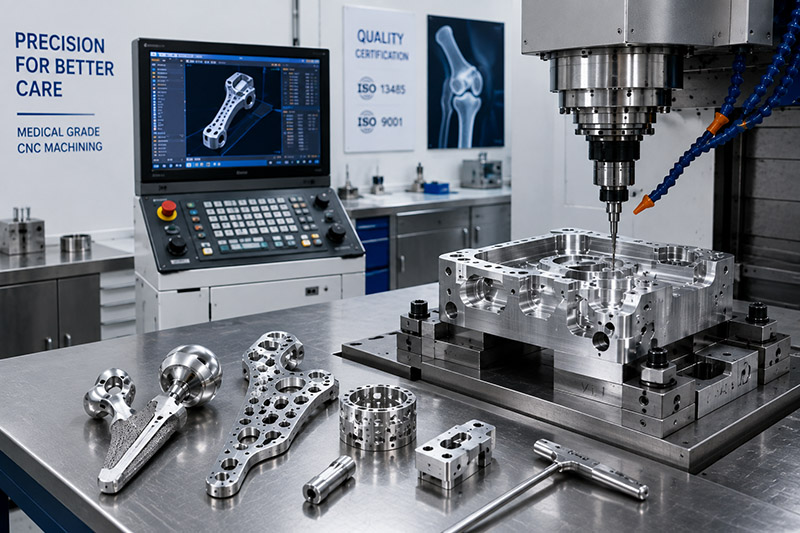
Case Overview
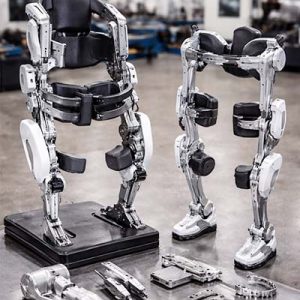
Luca Moretti and his engineering team were developing a full-body passive exoskeleton designed for rehabilitation and ergonomic assistance. The system combined precision mechanical joints, lightweight structural frames, and custom mounting components that needed to assemble accurately while remaining comfortable for long-term use.
HUB Machining supported the project by manufacturing 5-axis CNC machined components together with sheet metal parts for prototype and low-volume production. As the design evolved, updated components were produced to support ongoing development while maintaining consistent quality and assembly across the complete system.

Project Challenges
- Develop a lightweight yet durable exoskeleton structure suitable for long-term wear in rehabilitation and ergonomic assistance applications.
- Integrate 5-axis CNC machined components with sheet metal assemblies while maintaining consistent alignment across mating parts.
- Reduce overall weight without compromising structural rigidity or mechanical performance.
- Support multiple design revisions during prototype development while keeping lead times short.
- Ensure repeatable assembly by controlling critical hole locations, joint interfaces, and mounting features.

Manufacturing Solution
- Manufactured complex joint housings, linkages, and interface components using 5-axis CNC machining to achieve accurate fits and smooth mechanical movement.
- Produced structural brackets, covers, and support frames through laser cutting and sheet metal fabrication, improving manufacturability and reducing overall weight.
- Optimized machining and fabrication processes to maintain dimensional consistency between CNC and sheet metal parts throughout assembly.
- Worked closely with the customer during prototype iterations, quickly incorporating drawing revisions without delaying production.
- Performed dimensional inspection on critical assembly features, including hole positions, mounting interfaces, and mating surfaces, before shipment to support efficient prototype assembly.

Results
The project demonstrated how combining 5-axis CNC machining with sheet metal fabrication can provide an effective manufacturing approach for lightweight medical and rehabilitation equipment, balancing precision, structural strength, and manufacturability.
- Consistent fit and alignment throughout the assembled exoskeleton structure.
- Lightweight components manufactured without compromising structural integrity.
- Reliable performance of precision-machined joints and structural assemblies during prototype evaluation.
- Efficient implementation of engineering changes throughout product development.
- Manufacturing processes established to support future low-volume production.
- PRECISION MEDICAL CNC MACHINING
- Built for Precision. Trusted for Medical Manufacturing.
- CNC Machining Case Study for Medical
- What Is Medical CNC Machining?
- Why Is CNC Machining Used in Medical Equipment?
- What Makes Medical Components Different?
- OUR MEDICAL CNC MANUFACTURING CAPABILITIES
- Typical Medical Components We Manufacture
- Why HUB Machining?
- Feedback from Ethan Williams
- Frequently Asked Questions About Medical CNC Machining
Key Project Data
Multi-Process
CNC · Sheet Metal


Typical Tolerance
±0.005 mm

Lead Time
20 Days

Medical Industry
What Is Medical CNC Machining?
Medical CNC machining is the process of manufacturing precision components used in medical devices, rehabilitation equipment, diagnostic instruments, laboratory systems, and surgical tools. CNC machining enables complex geometries, tight dimensional control, and consistent repeatability for both prototype development and production.
Common materials include aluminum, stainless steel, titanium, and engineering plastics, depending on the application’s requirements for strength, weight, corrosion resistance, and biocompatibility.
Why Is CNC Machining Used in Medical Equipment?
Medical equipment often includes components with complex geometries, precise interfaces, and moving assemblies that require consistent dimensional accuracy. CNC machining is widely used because it can produce these parts with high repeatability while supporting rapid design changes during product development.
It is commonly used for manufacturing structural frames, housings, brackets, joint components, surgical instruments, and precision parts for diagnostic, rehabilitation, and laboratory equipment. CNC machining also supports a wide range of materials, including aluminum, stainless steel, titanium, and engineering plastics, making it suitable for both prototypes and production.
What Makes Medical Components Different?
Medical components are designed with requirements that go beyond dimensional accuracy. Depending on the application, manufacturers must consider performance, reliability, material selection, and the consistency of every assembled part.
Compared with standard industrial components, medical parts often require:
- Tight control of critical assembly features and mating interfaces
- Lightweight designs for portable or wearable equipment
- Materials selected for corrosion resistance, durability, or biocompatibility
- Smooth surface finishes that are easy to clean or suitable for medical environments
- Consistent quality across prototypes, validation builds, and production
- Comprehensive dimensional inspection for critical components
These requirements make manufacturing process selection, quality control, and inspection just as important as machining precision.
OUR MEDICAL CNC MANUFACTURING CAPABILITIES
We provide precision CNC manufacturing for medical device companies, from rapid prototypes to production parts. Our expertise covers surgical instruments, diagnostic equipment, orthopedic devices, dental systems, and laboratory equipment. With advanced CNC machining, tight tolerance control, and comprehensive quality inspection, we deliver components that meet demanding medical manufacturing requirements.
Our 5-axis CNC machining capability enables efficient production of complex medical components with fewer setups and greater dimensional accuracy. It is ideal for surgical instruments, implant prototypes, orthopedic components, and medical device housings with intricate geometries.
We machine precision medical components such as instrument bodies, device enclosures, brackets, fixtures, and structural parts. Multi-axis milling ensures tight tolerances, excellent surface quality, and consistent repeatability across prototypes and production runs.
Our CNC turning services produce high-precision cylindrical components, including shafts, sleeves, connectors, threaded parts, pins, and custom fittings. Stable machining processes ensure excellent concentricity, dimensional accuracy, and surface finish.
Medical-Grade Materials
We machine a wide range of materials commonly used in medical devices, including stainless steel, titanium, aluminum alloys, PEEK, Delrin (POM), PTFE, and other engineering plastics. Material selection can be matched to your performance, weight, corrosion resistance, and biocompatibility requirements.. Explore our Materials Guide to compare machining properties, available grades, and recommended applications for each material.
We offer a variety of finishing options to improve durability, corrosion resistance, cleanliness, and appearance. Available processes include anodizing, passivation, electropolishing, polishing, bead blasting, laser marking, heat treatment, and other application-specific surface treatments., our Surface Finishing Guide explains each process, its advantages, compatible materials, and typical applications to help you make an informed decision.
Quality is verified throughout the manufacturing process using CMM inspection and calibrated measuring equipment. First Article Inspection (FAI), dimensional inspection reports, material certifications, and other quality documentation are available to support your project and compliance requirements.
Prototype to Production Manufacturing
Accelerate product development with rapid prototyping, fast design validation, and low-volume manufacturing. Explore our Rapid Prototyping capabilities to learn how we help reduce development time and move efficiently from concept to production.
Typical Medical Components We Manufacture
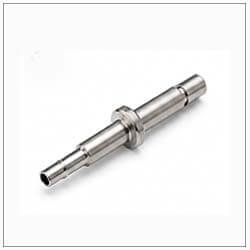
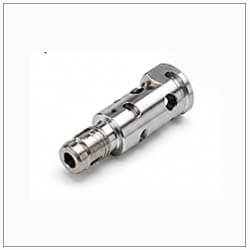
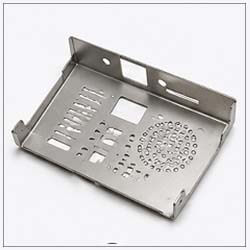
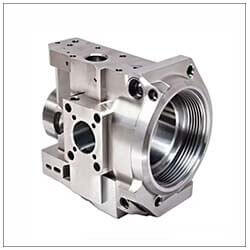
Automotive Machining Solutions
Why HUB Machining?
HUB Machining provides precision manufacturing solutions for medical companies based on customer drawings and specifications. With experienced engineers, advanced CNC machining capabilities, and strict quality control, we help customers produce reliable medical components with consistent quality and performance.
Why Us
- High-accuracy CNC machining for complex medical components.
- Reliable processes and strict inspection for every project.
- Flexible support from prototypes to production batches.
- Fast response, clear communication, and reliable delivery.
- Experience producing precision components for medical devices and healthcare applications.
Industry Solutions
Feedback from Ethan Williams
“The main challenge was machining a medical component with several tight-tolerance features that needed to align precisely during final assembly. We had difficulties finding a supplier who could maintain these requirements while keeping production stable.”
“HUB Machining helped us adjust the machining approach and improve process control. Their detailed inspection feedback allowed us to quickly identify and resolve issues during development, resulting in parts that met our assembly requirements.”
.— Ethan Williams, Manufacturing Engineer
Medical Device Company