
PRECISION MACHINING FOR COMMUNICATIONS
Built Around Compact Communications Systems
CNC-machined components for communications equipment where compact layouts, thermal management, and accurate mechanical interfaces need to work together. From housings and mounting structures to thermal components and connector supports.


Case Overview
Ryan Mitchell, a Manufacturing Engineer at a U.S. communications equipment manufacturer, was responsible for sourcing machined components for a compact communications platform.
The equipment placed electronic and mechanical components within a confined enclosure, making the available mounting and cooling space particularly important. Several machined parts incorporated multiple mounting locations, openings, pockets, and mating surfaces that had to work together within the same assembly.
Aluminum was specified for several components to balance weight, machinability, and heat dissipation. The customer provided the part drawings, 3D CAD models, material specifications, tolerances, and finishing requirements, while HUB handled the machining and inspection of the finished components.
The project required more than simply producing individual parts. The dimensions and feature locations of each component had to support the overall mechanical layout of the communications equipment.

Project Challenges
The main challenge was the high concentration of functional features within relatively small aluminum components.
- Mounting holes, connector openings, pockets, and mating surfaces were often positioned close to one another. Small dimensional deviations could affect clearance or alignment with adjacent components.
- Some parts also contained larger machined surfaces where flatness was important. Material removal from these areas needed to be controlled to reduce unwanted movement during machining.
- For components involved in thermal management, the specified contact surfaces also required careful control of geometry and surface condition.
- The machining process therefore needed to consider how individual features related to the overall equipment assembly, rather than simply achieving each dimension independently.

Manufacturing Solution
Hub based the machining approach on the functional relationships shown in the customer’s drawings and 2D and 3D models.
- Feature positioning: Mounting holes, openings, pockets, and mating surfaces were prioritized during process planning to maintain their required relationships.
- Aluminum machining: Workholding and cutting sequences were selected according to part geometry to help control movement and maintain flatness.
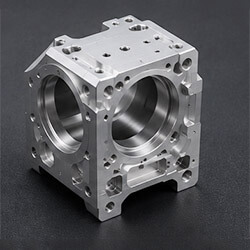
- Multi-axis machining: 5-axis machining was used where multiple surfaces or complex feature orientations required improved access, while CNC milling handled the primary housings, plates, and brackets.
- Thermal surfaces: Functional heat-transfer surfaces were machined and inspected according to the specified dimensional and surface requirements.
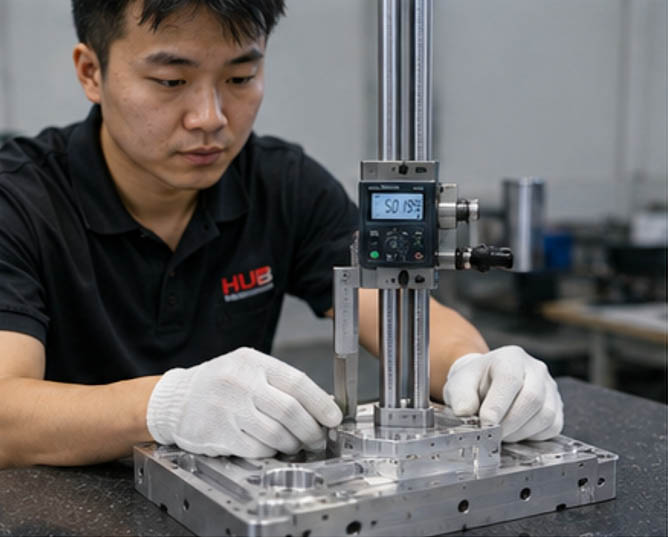
- Assembly-focused inspection: Inspection concentrated on mounting-hole locations, interface dimensions, flatness, and other features affecting final assembly.

Results & Value
The finished components were manufactured according to the customer’s specified materials, dimensions, tolerances, and surface requirements.
Accurate positioning of mounting and interface features helped the components fit within the compact equipment enclosure without unnecessary modification. Controlled aluminum machining also supported the required combination of lightweight construction and functional thermal surfaces.
By focusing production and inspection on the relationship between critical features, HUB provided components suitable for integration into the customer’s mechanical and electronic assemblies.
- PRECISION MACHINING FOR COMMUNICATIONS
- Built Around Compact Communications Systems
- CNC Machining Case Study for the Communications Industry
- What Is CNC Machining for Communications?
- Why Use CNC Machining for Communications?
- What Makes Communications Components Different?
- OUR COMMUNICATIONS CNC MACHINING CAPABILITIES
- Typical Communications Components We Manufacture
- Why HUB Machining?
- Feedback from Mark Bennett
- Frequently Asked Questions About Communications CNC Machining?

Key Project Data
Machining
Milling. 5-Axis CNC


Typical Tolerance
±0.01 mm

Lead Time
25 Days

Communications Industry
What Is CNC Machining for Communications?
Communications industry CNC machining is the production of custom metal and engineering plastic components for communication equipment using CNC milling, turning, and multi-axis machining. Parts are manufactured from customer-supplied drawings and CAD files to meet specified dimensions, tolerances, materials, and surface finishes.
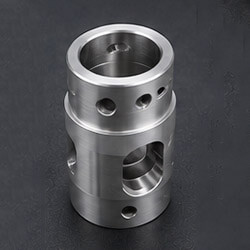
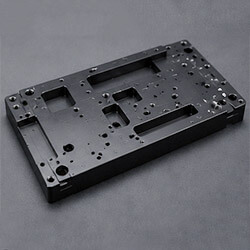
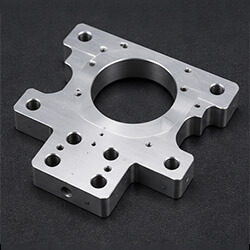
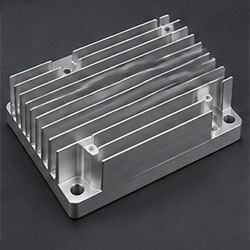
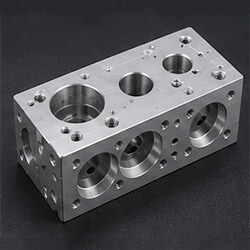
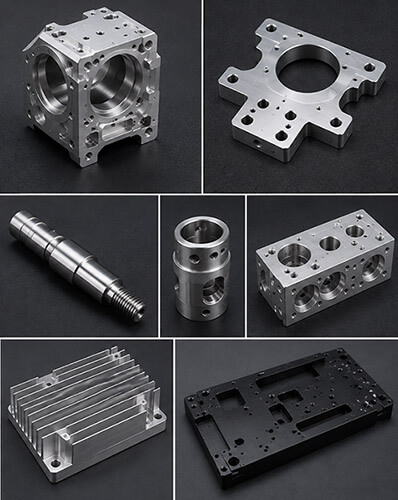
Typical machined components include equipment housings, mounting plates, brackets, connector supports, thermal components, and other custom mechanical parts used in communications equipment.
Why Use CNC Machining for Communications?
CNC machining gives communications equipment manufacturers more freedom to produce and modify custom mechanical parts without dedicated tooling. This is useful for equipment programs where part designs, configurations, and order quantities can change over time.
Key advantages include:
- No dedicated tooling: Parts can be machined directly from CAD data without creating molds or dies.
- Design flexibility: A new part version can be produced by updating the machining program when the engineering design changes.
- Suitable for different quantities: The same CNC process can be used for a few development parts or larger production runs.
- Material flexibility: CNC machines can process aluminum, stainless steel, copper, engineering plastics, and other specified materials.
- Complex feature production: Multiple features can be produced in a single component without changing to a different manufacturing method.
- Repeatable production: CNC programs and controlled processes help reproduce approved part geometries for subsequent orders.
What Makes Communications Components Different?
The main difference is the relationship between the mechanical part and the electronics around it. A communications component is rarely an isolated mechanical part; its dimensions can directly affect board placement, connector access, cooling, shielding, and available space inside the equipment.
Common characteristics include:
- High feature density: Multiple openings, pockets, mounting points, and interfaces may occupy a small component.
- Space-driven design: Wall thicknesses, clearances, and external dimensions are often constrained by the enclosure.
- Thermal considerations: Some machined surfaces or structures are designed around heat flow rather than simply mechanical strength.
- Interface-dependent geometry: Connector cutouts and mounting features need to correspond with electronic hardware.
- Lightweight construction: Aluminum is frequently selected when weight, machinability, and thermal performance need to be balanced.
- Equipment-specific parts: Components are commonly made for a particular device configuration rather than as universal mechanical hardware.
OUR COMMUNICATIONS CNC MACHINING CAPABILITIES
Communications equipment often packs complex mechanical features into a limited footprint. Our CNC manufacturing capabilities cover machined housings, mounting structures, thermal components, connector supports, and other custom parts where space, weight, cooling, and interface placement need to work together.
Our 5-axis CNC machining capability enables efficient production of complex medical components with fewer setups and greater dimensional accuracy. It is ideal for surgical instruments, implant prototypes, orthopedic components, and medical device housings with intricate geometries.
CNC milling is used for equipment housings, mounting plates, brackets, connector supports, and structural components. Precise milling helps maintain critical interfaces, pockets, openings, and mounting features.
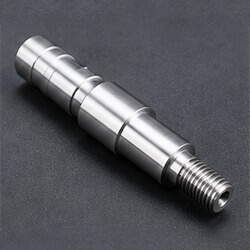
CNC turning produces cylindrical components such as shafts, pins, spacers, sleeves, and custom hardware used within communications equipment. Controlled turning processes provide consistent dimensions and concentricity.
Machining Materials
We machine communication components from a wide range of materials, including aluminum, copper alloys, stainless steel, and engineering plastics. Each material offers different advantages in strength, weight, conductivity, and durability. Explore our Materials Guide to compare machining properties, available grades, and recommended applications for each material.
Our surface finishing options improve the corrosion resistance, durability, and appearance of communication components. Available finishes include anodizing, powder coating, plating, passivation, and more.our Surface Finishing Guide explains each process, its advantages, compatible materials, and typical applications to help you make an informed decision.
Quality is verified throughout the manufacturing process using CMM inspection and calibrated measuring equipment. First Article Inspection (FAI), dimensional inspection reports, material certifications, and other quality documentation are available to support your project and compliance requirements.
Prototype to Production Manufacturing
Accelerate product development with rapid prototyping, fast design validation, and low-volume manufacturing. Explore our Rapid Prototyping capabilities to learn how we help reduce development time and move efficiently from concept to production.
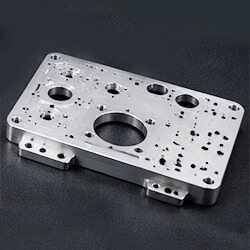
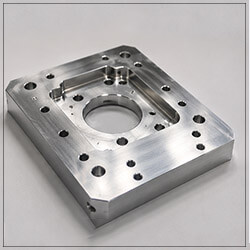
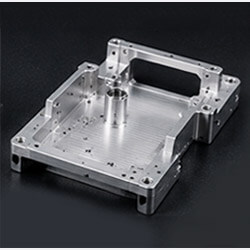
Typical Communications Components We Manufacture
Automotive Machining Solutions
Why HUB Machining?
Communications equipment leaves little room for mechanical compromises. We focus on the details that affect how machined components fit, cool, mount, and work together inside the finished system.
Why Us
- Compact-part machining for space-constrained equipment.
- Aluminum expertise for lightweight and thermal components.
- Complex CNC machining for dense, multi-surface features.
- Thermal surface control for heat-management components.
- Assembly-focused inspection for critical interfaces.
- Prototype to production for changing equipment requirements.
Industry Solutions
Feedback from Mark Bennett
“We were dealing with a fairly compact enclosure, so there wasn’t much room to correct a part once it was installed. The HUB parts arrived with the mounting holes, openings, and contact surfaces where we expected them to be. That made the mechanical assembly much easier on our side. We also appreciated that their team asked about the application when something on the drawing could affect machining, instead of simply producing the part and leaving the issue for us to discover during assembly.”
.— Mark Bennett, Manufacturing Engineer, U.S. Communications Equipment Company