
FROM IDEA TO LAUNCH, NPI MADE SIMPLE
Precision Metal Welding & Fabrication Services
Fast, reliable, and cost-effective welding solutions for prototypes and production.
Expert welding services for custom metal parts — from single prototypes to full production runs.
We handle everything from simple joints to complex welded assemblies, delivering strong, clean, and consistent results.





Trusted by engineers, manufacturers, and global brands worldwide, with10000+ customers across 100+ countries and regions.
Metal Welding Capabilities for Precision Fabricated Parts
We provide advanced metal welding and fabrication services with industry-leading strength, precision, and consistency — ideal for both prototype development and production assemblies.
Materials:
Stainless Steel (SS304 / SS316) · Aluminum Alloys · Carbon Steel · Brass · Copper · Other custom metal alloys supported as required
Welding Accuracy & Quality:
- Weld Position Accuracy: ±0.2 mm–±0.5 mm*
- Weld Seam Consistency: Uniform, clean welds with minimal distortion
- Visual & Structural Quality: Smooth appearance with strong joint integrity
Thickness & Size Capabilities:
- Material Thickness: 0.5 mm – 20 mm (typical range depending on process)
- Assembly Size: Small precision parts to large welded structures supported
- Custom capabilities available with specialized fixtures and tooling
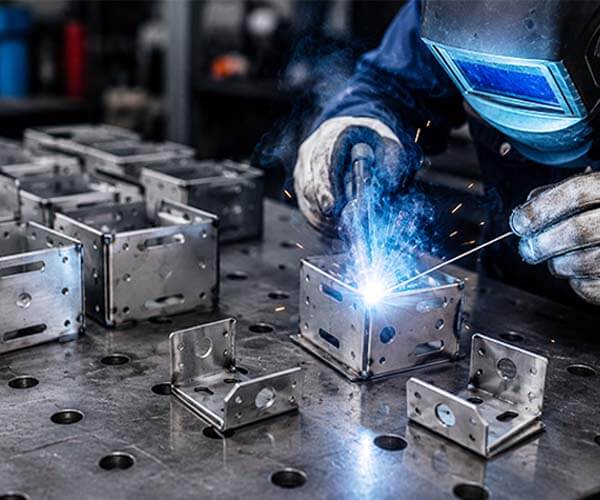
Flexible Welding Services for Every Project
Whether it’s a single prototype or a full production run, we provide expert metal welding solutions tailored to your project. We work with stainless steel, aluminum, carbon steel, brass, copper, and other alloys, delivering structurally sound joints and high-quality finishes.
Our team ensures each weld meets strict quality standards, controlling distortion, heat-affected zones, and seam consistency. From simple spot welds to complex assemblies, we make sure your parts are strong, precise, and ready for immediate use.
Supported Welding Processes & Applications
- TIG Welding (GTAW): High-precision welds for thin metals, aesthetic seams, and prototype parts
- MIG Welding (GMAW): Efficient welding for medium to thick sections, production assemblies.
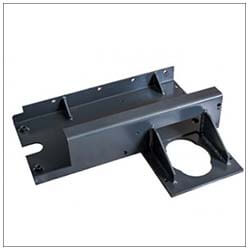
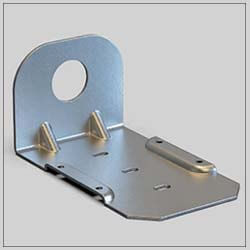
- Spot Welding: Sheet metal components, enclosures, brackets, and lightweight assemblies.
- Custom Fabrication Welding: mblies, multi-part structures, and structural frames.
- Brazing & Soldering (optional): Specialized joining for copper, brass, or delicate components
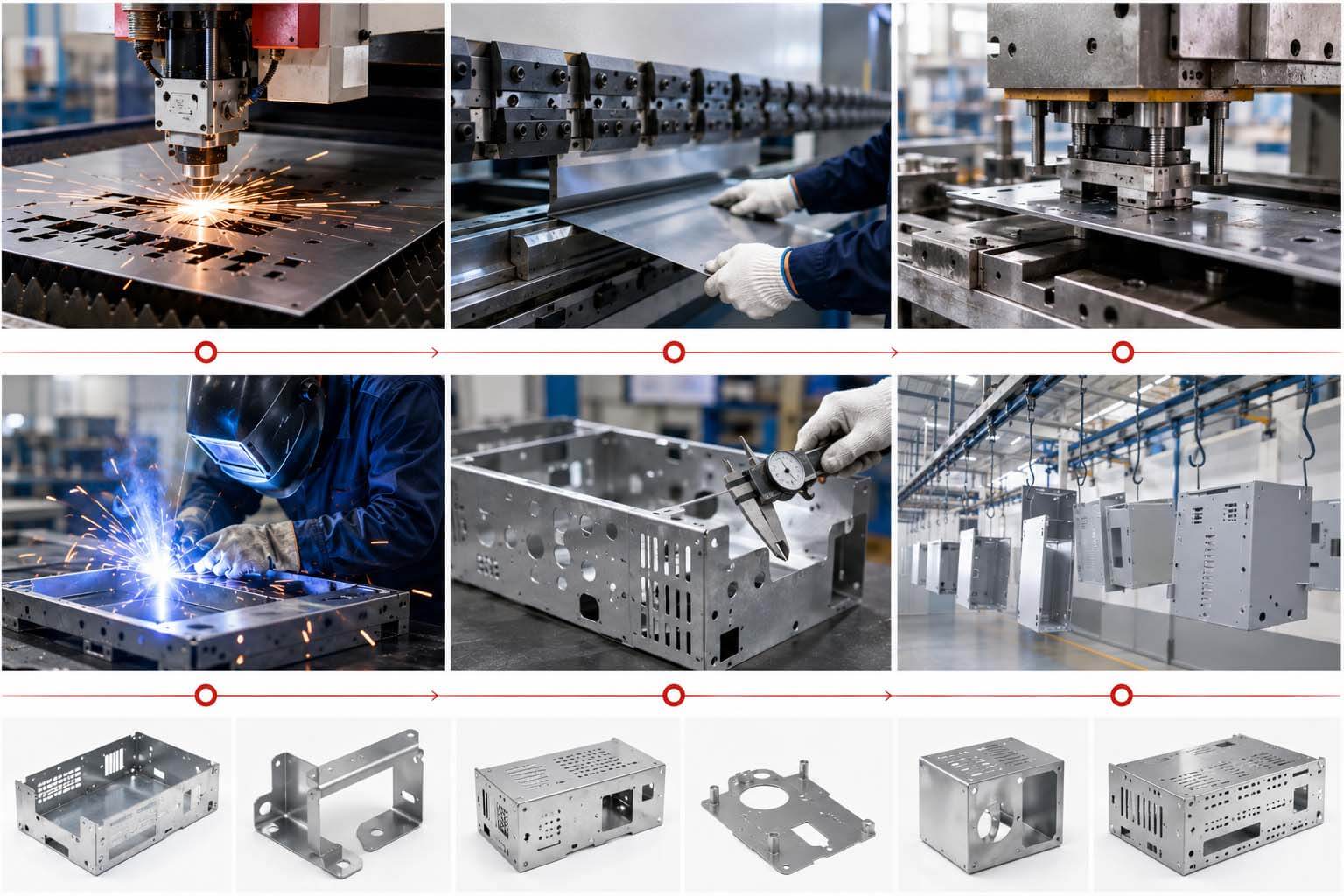

Upload Your Design
Send us your DXF, SVG, AI, or PDF file in seconds. Don’t worry if your file isn’t perfect — our engineering team will check it for production readiness. Whether it’s a detailed drawing, a STEP file, or a rough sketch you already prepared, we make it easy to get started without delays or technical barriers.

Get a Fast, Transparent Quote
Receive a clear, competitive quote with no minimum order and no hidden costs. Our team provides a free engineering evaluation with every request, helping you optimize your design, reduce costs, and avoid production issues — so you can move forward with confidence from day one.

Precision Metal Welding
Your components are fabricated with strict quality control and consistent standards at every stage. We ensure strong, reliable welds, uniform seams, and minimal distortion, so your assemblies perform exactly as designed. Whether it’s a single prototype or repeat production, you can expect high-quality, structurally sound results every time — durable, precise, and ready for use without rework or compromise.

Fast, Reliable Delivery
Need it urgently? We offer same-day production for many orders. Whether it’s a one-off prototype or a small batch, we deliver quickly and reliably — helping you stay on schedule and ahead of deadlines, hit critical deadlines, and move your project forward with confidence.
Precision & Quality You Can Trust
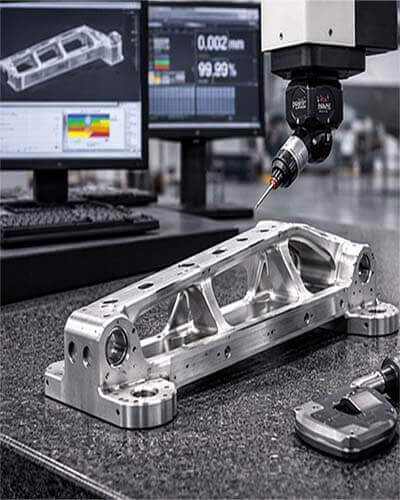
At HUB Machining, we ensure every part meets the highest standards. From material inspection to final measurement, our rigorous quality control process guarantees consistent, reliable results for your custom components.

Material Verification
Inspect raw materials to ensure compliance with specifications and traceability.

In-Process Inspection
Monitor each machining step with advanced measuring equipment to maintain precision.

First Article Inspection (FAI)
Verify the first part against design drawings and specifications to ensure production accuracy before full-scale manufacturing.

Final Testing & Certification
Conduct thorough dimensional checks, surface inspections, and testing before delivery, ensuring every part meets your expectations.

Multi-Industry Manufacturing Solutions for Global Customers
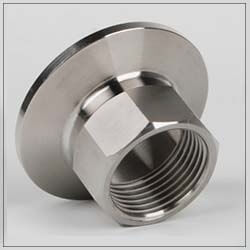
We serve customers worldwide with reliable manufacturing solutions across multiple industries, including aerospace, automotive, medical, and industrial automation. With efficient production and global logistics, parts can be delivered in as little as 5–10 days.
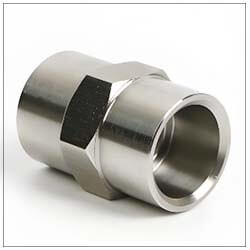
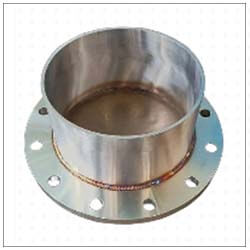
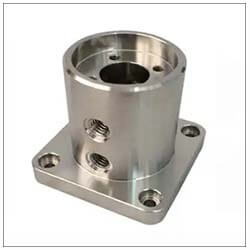
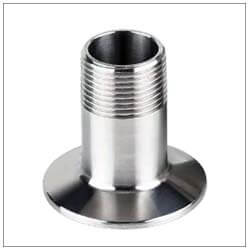
WHY HUB MACHINING?
Your Reliable Manufacturing Partner
Your Reliable Manufacturing Partner
NPI prototyping bridges early concepts to full-scale production.
Based on customer-provided designs, our team evaluates feasibility,
identifies risks, and validates performance.
Concept & Design Review
Your design, we review feasibility and manufacturability.
DFM feedback optimizes structure, tolerance, and lead time.
Rapid Prototyping & EVT
Fast prototypes validate function, fit, and assembly.
Design iterations are refined through EVT testing.
Pilot Run
Small-batch production verifies process stability and yield.
Quality and consistency are evaluated before scale-up.
Mass Production Launch
Validated processes enable stable, scalable manufacturing.
Consistent quality and reliable delivery are ensured.
Customer Success Case
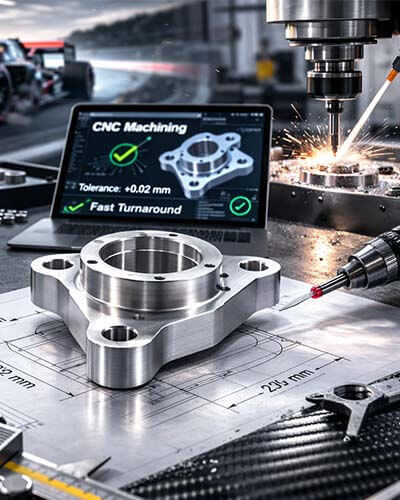
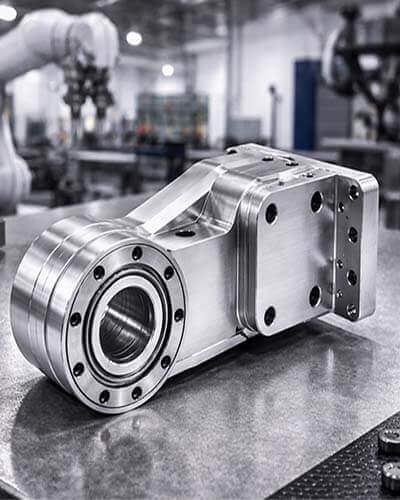
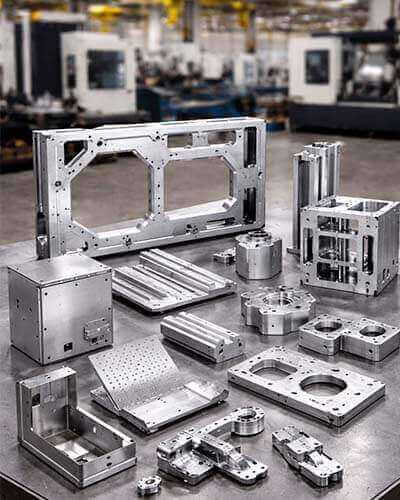
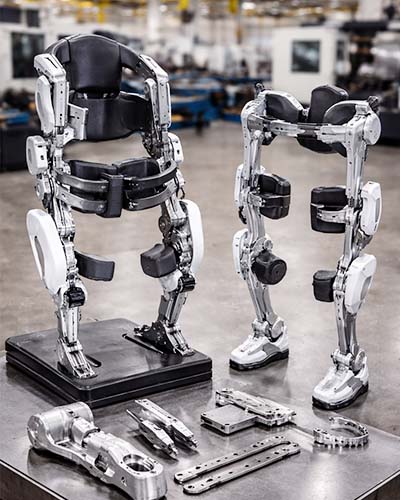
HUB partners with companies across the automotive, aerospace, medical, electronics, and robotics industries, supporting projects at every stage—from early-stage prototyping to full-scale production. From individual innovators to Fortune 500 enterprises, we deliver trusted CNC machining solutions with precision, quality, and reliability worldwide.
Customer Reviews
“From laser cutting to bending and welding, every process was handled professionally. The assembled sheet metal components fit perfectly, which significantly reduced our assembly time.”
Ryan Mitchell
“We were impressed by the consistent quality and attention to detail. HUB Machining provided valuable DFM suggestions that improved manufacturability while reducing production costs.”
Oliver Bennett
“Having machining, sheet metal fabrication, welding, and assembly from one supplier simplified our supply chain and improved project efficiency. The overall experience exceeded our expectations.”
Marco Rossi
How To Work With US
01
Upload Files
Upload your 2D/3D design files and share key project details.
02
DFM Review
Our engineers optimize your design for manufacturability, quality, and cost efficiency.
03
Confirm & Produce
Approve the quote and start precision machining with our experienced team.
04
Receive Parts
Get high-quality custom parts delivered straight to your door, ready to use.
FAQS
Yes. We can provide various inspection documents upon request, including First Article Inspection (FAI) reports, dimensional inspection reports, material certificates, Certificates of Conformance (CoC), and other quality documentation to support your project and compliance requirements.
We use a wide range of precision inspection equipment, including Coordinate Measuring Machines (CMM), digital calipers, micrometers, height gauges, thread gauges, pin gauges, bore gauges, and other measuring instruments. Our inspection process ensures that every component meets the required dimensional and quality standards.
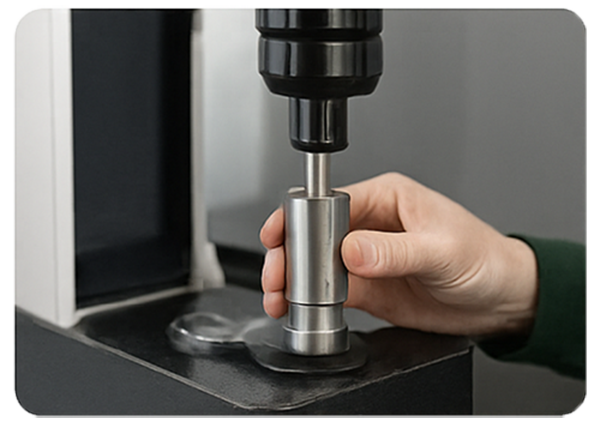
Yes. We provide hardware installation services as part of our assembly process. We can install screws, nuts, bolts, threaded inserts, rivets, PEM fasteners, standoffs, pins, and other standard hardware according to your drawings and assembly specifications, ensuring secure and accurate installation.
Vacuum casting silicone molds are typically completed within 5–10 business days, allowing rapid prototype production. Die casting steel molds usually require 3–6 weeks, depending on part complexity and tooling requirements. We will provide an estimated tooling schedule with every quotation.
We offer a range of die casting materials, including aluminum alloys, zinc alloys, and magnesium alloys. Aluminum is widely used for its strength, lightweight properties, and corrosion resistance. Zinc provides excellent dimensional accuracy and is suitable for small, intricate components, while magnesium offers an outstanding strength-to-weight ratio for lightweight applications.
The best casting process depends on your production volume, material, and product requirements. Die casting is recommended for medium- to high-volume production of metal parts that require excellent strength and dimensional consistency. Vacuum casting is ideal for rapid prototyping and low-volume production of plastic parts with high-quality surface finishes. Our engineering team can help you select the most suitable process based on your project goals.
Die casting is a high-volume manufacturing process that injects molten metal into a hardened steel mold under high pressure. It is ideal for producing durable, high-precision metal parts with excellent repeatability. Vacuum casting uses silicone molds to produce plastic or rubber-like parts, making it a cost-effective solution for prototypes and low-volume production. The right process depends on your material, quantity, budget, and application requirements.
Anodizing is an electrochemical process that creates a durable oxide layer on the surface of aluminum, improving corrosion resistance, wear resistance, and hardness while maintaining a metallic appearance. Powder coating applies a protective polymer coating that provides excellent durability, impact resistance, and a wide range of color options. Anodizing is suitable only for aluminum, while powder coating can be applied to aluminum, steel, and other metals. The best choice depends on your application, performance requirements, and desired appearance.
Yes. We offer anodizing in a variety of standard colors, including clear (natural), black, red, blue, gold, and other custom colors, depending on the material and project requirements. Anodizing not only enhances the appearance of aluminum parts but also improves corrosion resistance, wear resistance, and surface hardness. If you have specific color requirements, we can match them as closely as possible.
The best surface finish depends on your application, material, operating environment, and appearance requirements. For example, anodizing improves corrosion resistance for aluminum, powder coating provides a durable decorative finish, while plating enhances wear resistance and electrical conductivity. Our engineering team can recommend the most suitable finishing process based on your functional and aesthetic requirements.
Yes. We offer a variety of RoHS-compliant surface finishing options, including anodizing, powder coating, passivation, zinc plating, electroless nickel plating, and other environmentally compliant treatments. If your project requires RoHS, REACH, or other regulatory compliance, please let us know during the quotation stage.