
PRECISION AUTOMOTIVE CNC MACHINING
Reliable CNC Machining for Automotive & Motorsport Components
From rapid prototypes to production parts, we deliver precision CNC machining solutions for racing, motorcycles, bicycles, ATVs, and high-performance vehicles.

5-axis CNC Mill-Turn Machining

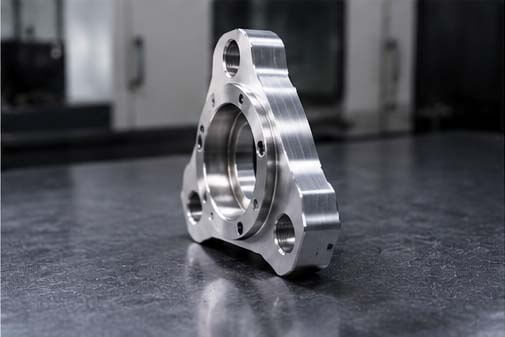
Case Overview
Alessandro Conti, a motorsport mechanical engineer focused on performance-driven design, worked closely with HUB Machining to manufacture high-performance structural and rotational components.
The project focused on manufacturing lightweight yet structurally strong components capable of withstanding extreme mechanical loads, high rotational speeds, and demanding track conditions.
Through close collaboration between engineering teams, HUB optimized machining strategies, material selection, and production processes to deliver race-ready components with exceptional dimensional accuracy and reliability.

Project Requirements
Performance-Driven Component Development
Motorsport components require a unique combination of:
- Lightweight construction
- Maximum structural rigidity
- High dimensional accuracy
- Excellent surface quality
- Reliable performance under extreme conditions
The customer needed a manufacturing partner capable of producing complex geometries while maintaining tight tolerances throughout the production process.
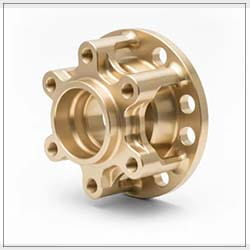
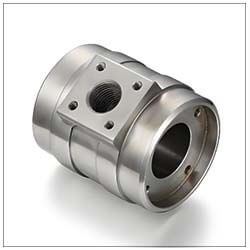
Manufacturing Challenges

Complex 3D Geometries
Racing components often feature intricate designs optimized for weight reduction and aerodynamic performance.
Traditional machining methods would require multiple setups, increasing production complexity and affecting accuracy.

Tight Tolerance Requirements
Critical rotational and structural components required precise dimensional control to ensure proper assembly, balance, and performance.
Lightweight Material Selection & Machining
Motorsport components require materials that provide an excellent balance between lightweight performance, structural strength, and durability under demanding racing conditions.
The customer needed components that could reduce weight while maintaining sufficient rigidity and reliability during high-speed operation.
Manufacturing Solution

5-Axis CNC Mill-Turn Machining
Using our 5-axis CNC mill-turn machining, HUB overcame complex structural challenges by producing multi-angle features, lightweight pockets, and precision geometries with fewer setups. This advanced capability improved dimensional accuracy, surface quality, and consistency for high-performance motorsport components.

Material Selection & Machining Optimization
After reviewing the component design, loading conditions, and performance requirements, HUB recommended Aluminum 7075-T6 as the optimal material choice.
Compared with standard aluminum alloys, Aluminum 7075-T6 provides a higher strength-to-weight ratio, making it suitable for performance-critical racing components where weight reduction and rigidity are equally important.
We also optimized cutting parameters, tooling selection, and machining strategies to ensure excellent surface finishes, dimensional accuracy, and consistent quality throughout production.
Key Project Data
Machining Method
Mill-turn Machining

Typical Tolerance
±0.05 mm

Lead Time
5 Days

Automotive Industry
What Is Automotive CNC Machining?
Automotive CNC machining is the precision manufacturing of components used in passenger vehicles, commercial vehicles, electric vehicles (EVs), hybrid systems, motorsports, and autonomous driving systems. Using CNC milling, CNC turning, and 5-axis machining, manufacturers produce high-precision parts that meet strict automotive quality and performance standards.
Automotive parts require high dimensional accuracy, excellent repeatability, durable materials, and consistent quality to ensure reliable performance throughout the vehicle’s service life.
Why Is CNC Machining Used in Automotive?
CNC machining is widely used in the automotive industry because it delivers the precision, repeatability, and production efficiency required for modern vehicle manufacturing. It supports a wide range of engineering materials, including aluminum, stainless steel, alloy steel, titanium, brass, copper, and engineering plastics.
From prototype development to low- and medium-volume production, CNC machining provides fast lead times, consistent quality, and the flexibility to manufacture complex geometries while maintaining tight tolerances. It is ideal for performance vehicles, EV components, aftermarket parts, and automotive testing fixtures.
What Makes Automotive Components Different?
Automotive components must meet demanding performance, durability, and production requirements. Compared with general industrial parts, they typically require:
- Tight dimensional tolerances
- High strength and long service life
- Lightweight materials for improved fuel efficiency and EV range
- Excellent wear, corrosion, and heat resistance
- Consistent quality across production batches
- Precision machining for reliable assembly and performance
- Cost-effective manufacturing for scalable production
These requirements ensure reliable operation under continuous vibration, high temperatures, heavy loads, and demanding driving conditions.
OUR AUTOMOTIVE MANUFACTURING CAPABILITIES
Manufacture high-precision automotive components with tight tolerances, consistent quality, and reliable production. From engine and transmission parts to EV battery housings and motorsport components, we deliver precision CNC machined metal and plastic parts for demanding automotive applications.
From rapid prototyping to low-volume and production manufacturing, we support every stage of automotive product development with fast lead times and consistent quality.
Automotive CNC Machining Processes
Our aerospace manufacturing capabilities include CNC milling, CNC turning, 5-axis machining, Swiss machining, EDM machining, laser cutting and die casting for precision automotive components.
We machine aluminum, stainless steel, alloy steel, titanium, brass, copper, and engineering plastics to meet the strength, weight, and durability requirements of automotive applications.
We offer anodizing, hard anodizing, zinc plating, nickel plating, black oxide, powder coating, bead blasting, polishing, passivation, and laser marking to improve corrosion resistance, durability, and appearance.
We provide mechanical assembly, CMM inspection, First Article Inspection (FAI), dimensional verification, and complete quality documentation to ensure every part meets your specifications.
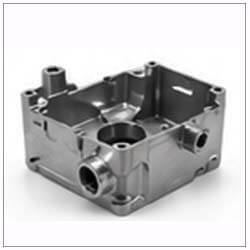
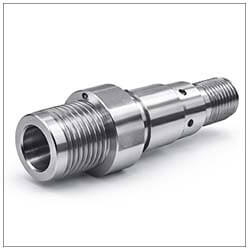
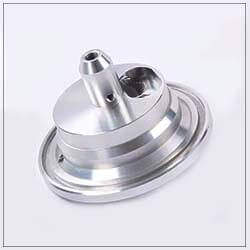
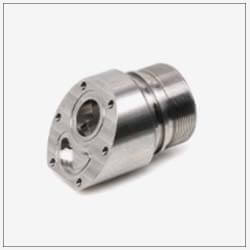
Typical Automotive Components We Manufacture
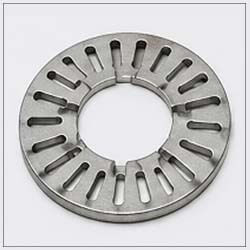
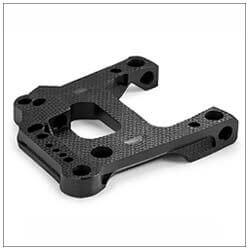
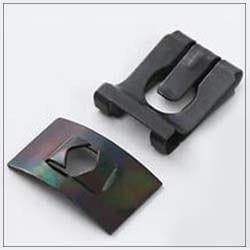
Automotive Machining Solutions
Why HUB Machining
HUB Machining delivers precision CNC machining solutions for the automotive industry, supporting everything from rapid prototyping to production manufacturing. We help automotive manufacturers produce high-quality components with tight tolerances, reliable performance, and consistent quality.
Why Us
- Automotive-focused precision manufacturing
- Strong capability in complex CNC machining
- Tight tolerances and rigorous quality inspection
- Fast engineering communication and DFM support
- Reliable prototype-to-production manufacturing
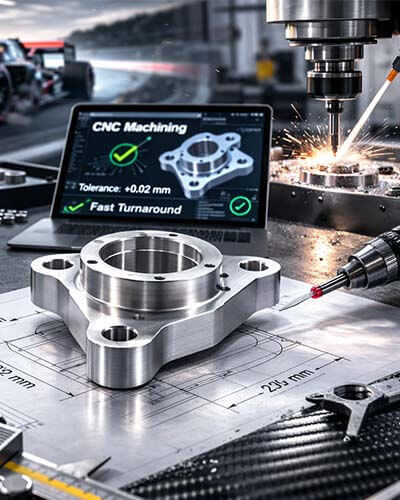
Industry Solutions
Feedback from Thomas Weber
“Our main concern was maintaining dimensional consistency after moving from prototype parts to production batches. Previous suppliers struggled with tolerance variation between runs. HUB helped optimize the machining process and inspection points, keeping critical dimensions within specification throughout production. The components arrived with stable quality and required no additional adjustment during assembly.””
— Thomas Weber, Automotive Product Engineer