
PRECISION CNC MACHINING FOR ELECTRONICS
CNC Machining for Electronic Equipment
From EMI shielding and grounding to heat transfer and electrical isolation, we manufacture metal and plastic components designed around the functional requirements of electronic equipment.


Case Overview
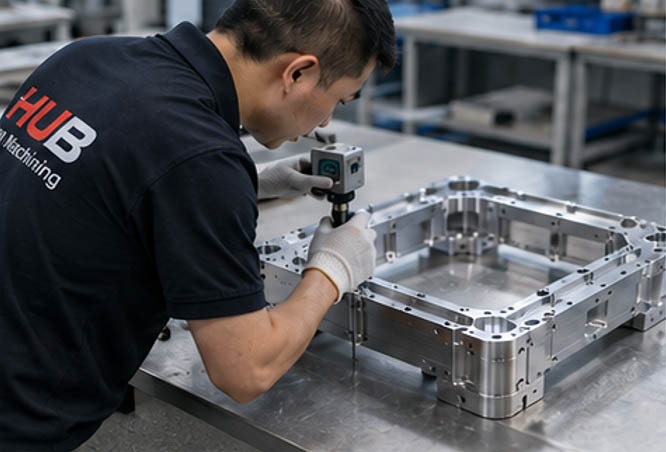
Michael Turner, a Mechanical Engineer at a U.S. electronics manufacturer, was coordinating the mechanical side of an RF module project. The electronic design was already established, but the mechanical components surrounding the circuitry had different functional requirements that needed to be addressed during manufacturing.
Some parts formed the enclosure and shielding boundary. Others provided a path for heat to move away from active electronics, while smaller panels and supports handled connector access and board mounting. This meant that a single manufacturing approach could not simply be applied to every part.
The customer supplied the part specifications and required finishes. Kintec’s role was to manufacture the individual components and maintain the specified functional features through machining, finishing, and inspection.

Project Challenges
- Thin-wall stability
The shielding components used relatively thin aluminum sections to keep the module lightweight. Removing material from these areas without introducing distortion required careful machining control. - Conductive contact areas
The shielding effect depended on consistent contact between mating surfaces. Surface condition, flatness, and the absence of machining damage were therefore important in selected areas. - Dense feature layout
Small shielding parts combined mounting holes, recesses, openings, and perimeter features. Their relative positions needed to remain consistent for proper enclosure assembly. - Finishing requirements
Different surfaces had different functional requirements. External surfaces could require protective finishing, while selected contact areas had to remain suitable for their intended electrical or mechanical function.

Manufacturing Solution
- Controlled machining for thin sections — Workholding and cutting sequences were adjusted for thin-wall areas to reduce vibration and machining distortion.
- Dedicated control of contact surfaces — Shielding contact areas were treated as critical features, with machining and inspection focused on flatness, surface condition, and dimensional consistency.
- Feature-based machining strategy — Mounting holes, openings, recesses, and perimeter features were machined from controlled references to maintain their relative positions.
- Multi-axis machining where needed — 5-axis machining was used for components with features across multiple faces, helping reduce unnecessary setups.
- Function-specific surface finishing — Finishing requirements were separated by functional area, allowing external surfaces and electrical/mechanical contact areas to be treated according to their respective requirements.
- Final dimensional inspection — Critical dimensions, hole locations, contact surfaces, flatness, and overall geometry were checked before shipment.

Results & Value
The completed components were integrated into the customer’s RF module without requiring significant adjustment to the machined parts.
The manufacturing approach helped the customer:
- Maintain consistent contact around shielding components
- Keep thermal mating surfaces within the specified requirements
- Preserve the position of mounting holes and connector openings
- Avoid unnecessary finishing on functional contact areas
- Assemble the different machined components more efficiently
- Reuse the established manufacturing and inspection approach for subsequent batches
- PRECISION CNC MACHINING FOR ELECTRONICS
- CNC Machining for Electronic Equipment
- CNC Machining Case Study for Electronics Industry
- What Is CNC Machining for Electronics?
- Why Use CNC Machining for Electronics?
- What Makes Electronic Equipment Parts Different?
- OUR ELECTRONICS EQUIPMENT CNC MACHINING CAPABILITIES
- Typical Electronic Components We Manufacture
- Why HUB Machining?
- Feedback from Michael Turner
- Frequently Asked Questions About CNC Machining for Electronic Equipment?
Key Project Data
Multi-Process
CNC Milling · 5-Axis


Typical Tolerance
±0.01mm

Application
RF Electronic Module

Electronics
What Is CNC Machining for Electronics?
CNC machining for electronics is the production of custom metal and engineering plastic parts used in electronic equipment. These machined parts provide the structural, thermal, protective, and interface functions around electronic assemblies.
Typical parts include equipment housings, covers, shielding enclosures, mounting plates, brackets, frames, heat-dissipation components, and other custom hardware. Aluminum, stainless steel, copper alloys, PEEK, Delrin, PTFE, and other materials can be machined according to customer-supplied drawings and 3D mold files.
Why Use CNC Machining for Electronics?
CNC machining provides direct control over geometry, materials, critical surfaces, and interfaces, making it suitable for these electronic equipment requirements.
- Shielding: Machined metal housings, covers, and mating surfaces can support EMI/RFI shielding requirements.
- Grounding: Precise conductive contact areas can help maintain consistent electrical continuity.
- Heat transfer: Aluminum and copper parts can be machined with controlled contact surfaces for thermal management.
- Electrical isolation: PEEK, Delrin, PTFE, and other engineering plastics can be machined into insulating supports and spacers.
- Compact integration: CNC can produce precise openings, clearances, slots, and mounting features within limited spaces.
- Interface accuracy: CNC machining maintains the dimensional consistency required for mounting and connector interfaces.
- Material flexibility: Both metals and engineering plastics can be machined according to the functional requirements of the equipment.
What Makes Electronic Equipment Parts Different?
Electronic equipment components often need to perform more than structural functions. Their design may be affected by EMI/RFI shielding, grounding, heat transfer, electrical isolation, and limited internal space.
Common requirements include:
- EMI/RFI shielding: Metal housings and covers may need to help contain electromagnetic interference.
- Grounding: Machined conductive surfaces may need to provide reliable electrical contact.
- Thermal management: Metal parts may require controlled contact surfaces for heat transfer.
- Electrical isolation: Engineering plastics may be used to separate conductive parts from electronic hardware.
- Compact layouts: Components must often fit around boards, cables, connectors, and other hardware.
- Precise interfaces: Mounting holes, openings, threads, and locating features need accurate alignment.
- Mixed materials: Aluminum, copper, stainless steel, and engineering plastics may be selected for different functions.
OUR ELECTRONICS EQUIPMENT CNC MACHINING CAPABILITIES
We CNC machine custom metal and plastic parts for electronic equipment, including housings, covers, brackets, frames, mounting plates, and other precision mechanical components. We focus on manufacturing the physical parts that support and protect electronic systems—not electronic components themselves.
5-axis machining is available for components with features across multiple faces or geometries that are difficult to produce efficiently with conventional setups. It helps reduce unnecessary repositioning on complex housings and structural parts.
We use CNC milling to produce aluminum housings, covers, mounting plates, brackets, frames, and other mechanical parts for electronic equipment. Machining can cover mounting features, hole patterns, openings, and other application-specific geometries.
CNC turning is used for cylindrical hardware such as pins, sleeves, spacers, shafts, threaded components, and other round mechanical parts used within electronic equipment.
Machining Materials
Aluminum, copper, brass, stainless steel, and engineering plastics are among the materials we work with for electronic equipment hardware. Depending on the part’s function, material choice may be driven by heat dissipation, electrical contact, weight, corrosion resistance, or mechanical strength. Explore our Materials Guide to compare machining properties, available grades, and recommended applications for each material.
Different parts call for different finishing approaches. We provide anodizing, bead blasting, polishing, powder coating, laser marking, passivation, and other surface treatments for electronic equipment hardware. Finishing can be specified by functional area to suit mounting, thermal, electrical contact, and appearance requirements. Explore our Surface Finishing Guide for process details and material compatibility.
Quality is verified throughout the manufacturing process using CMM inspection and calibrated measuring equipment. First Article Inspection (FAI), dimensional inspection reports, material certifications, and other quality documentation are available to support your project and compliance requirements.
Prototype to Production Manufacturing
Accelerate product development with rapid prototyping, fast design validation, and low-volume manufacturing. Explore our Rapid Prototyping capabilities to learn how we help reduce development time and move efficiently from concept to production.
Typical Electronic Components We Manufacture
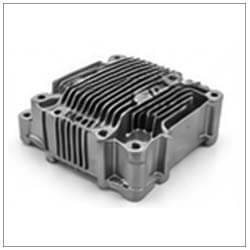
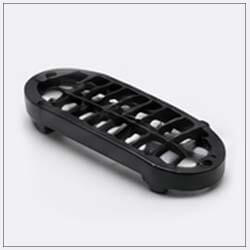
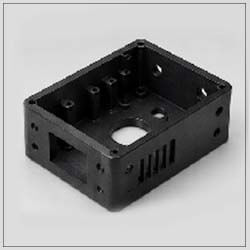
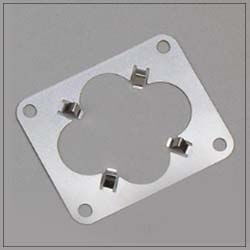
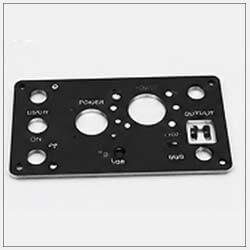
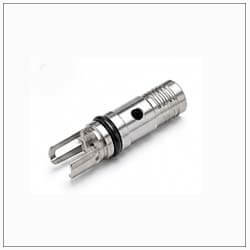
Electronics Industry CNC Machining Solutions
Why HUB Machining?
HUB Machining focuses on what happens around the electronics. Our machined housings, brackets, covers, and thermal components provide the structure, protection, and mechanical interfaces required by electronic equipment.
Why Us
- Function-focused machining for shielding, thermal, and mounting features.
- Thin-wall aluminum machining with controlled workholding.
Complex feature capability for compact equipment parts. - Function-specific finishing for different surface requirements.
- Critical-feature inspection for contact and assembly areas.
- Prototype to small-batch production for electronic equipment hardware.
Industry Solutions
Feedback from Michael Turner
“We had a few concerns with the shielding parts, particularly the thin sections and the areas where the cover contacted the rest of the assembly. We also needed different surface treatment requirements on different areas of the same part. HUB understood those details and produced the parts without compromising the functional surfaces. The components worked as expected in our first assembly, so we continued with them for the following batch.”
— Michael Turner, Mechanical Engineer, U.S. Electronics Manufacturer